How to Plant a Pool
By [https://EzineArticles.com/expert/Tony_Foxley/167021]Tony Foxley
Planting is probably the most important part in establishing your pool and it is often the most neglected. A pool cannot be successful without a full complement of aquatic plants, an under planted pool will usually remain green or cloudy unless you invest in a biological filtration with an ultra violet clarifier, without which, makes it difficult to see your fish except when they are near to the surface.
Pools should be planted when the plants are in their growing season, which is normally from late March to the end of September. If the pool has been filled with tap water then allow this to stand for a few days to allow Chlorine and other chemicals to disperse. It is important that the aquatic plants be given at least three weeks to establish before introducing any fish.
Water plants should be planted in open sided baskets; except for water lily tubs, which are generally solid. The baskets should first be lined with basket liners to prevent soil erosion then filled to within 1" of the rim with Stapeley's own aquatic soil, which has at least 60% clay content. The intended plant should be trimmed if necessary, a hole is made in the middle of the soil with your hand and the plant placed in the soil so that the top of the soil of the plant is the same level as in the basket, firm the soil around the plant and push a couple of plant food tablets deep into the soil. Trim the excess basket liner then top of the soil with well washed aquatic gravel, this will help to prevent the fish from digging into the soil.
To help with selecting which basket to purchase, refer to this chart below.
o Mini round-1 small marginal or 5 bunches of oxygenators
o Mini square- 1 small marginal or 5 bunches of oxygenators
o Medium round- 1 marginal, 10 bunches of oxygenators or 1 small water lily
o Small square- 1 marginals, 10 bunches of oxygenators or 1 small water lily
o Medium square- 1 or 2 marginals, 10 bunches of oxygenators or 1 small water lily
o Large square- 1 or 2 marginals, 15 bunches of oxygenators or 1 medium water lily
o Contour- 1-3 marginals or 15 bunches of oxygenators
o Lily tub- 1-3 larger marginals, 20 bunches of oxygenators or 1 medium or vigorous water lily
o Jumbo lily tub- 50-100 bunches of oxygenators or 1 vigorous water lily
The basket/tub should be placed into the pool in accordance to the type of plant it is (further details will be given later on). Avoid placing any plant basket too near moving water as the soil could be eroded and avoid putting lilies where fountains can splash them. Marginal plants look better in bold groups rather than individually, with the taller ones near the back of the pool and the lower growing ones near to the front.
It is difficult to give exact numbers of plants required for your pool, however, a guide to plant numbers can be found at the appropriate plant section.
Aquatic plants are divided into five main categories, these are: -
Oxygenating plants
Oxygenators are essential for all pools; the water is unlikely to clear until these plants are growing vigorously and in quantity. Without oxygenators, pools turn to a green pea-soup colour, this is caused by millions of microscopic, free floating single cell plants we call algae.
Algae flourish under the influence of sunlight and excess mineral salts present in the water. In time, oxygenators should compete for light and nutrients and literally starve the algae to death producing clear water. Apart from clearing the pool, oxygenators provide a supplementary food source for fish; they also provide a spawning medium and hiding place for fish, amphibians and insects. Oxygenators are sold either already potted up or as unrooted cuttings, which should be planted up and be placed, eventually, at the bottom of the pool.
Oxygenators- allow 5 bunches per 1 sq. metre of water surface
Water Lilies
These are without doubt the queens of the pool; these most beautiful of plants come in five colours, white, red, pink, yellow and changeable/copper. They can flower from June to October with often, a constant succession of blooms, each lasting for 3-5 days and some providing a delicate perfume.
Whilst most water lilies are cultivated for their beautiful flowers, the leaves of some varieties are also very pretty, with their striking tiger stripes or delicate mottling, water lily leaves also provide shade for fish and cut down the amount of sunlight reaching the water surface helping to control algae growth. Varieties vary in size from the dwarf 'Pygmaea Helvola' that has leaves often the size of a fifty pence piece and can grow in 6" of water, to the giant 'Gladstoneana' with its 18" diameter leaves; this variety can eventually live in 1.2 metres of water.
Care must be taken when selecting your water lily as the wrong choice could lead to the plant either being too big or too small for the pool, the ideal coverage rate for a water lily is approx 65-75% of the water surface; the coverage rates for each size of water lily is shown below. As an example, I have a pool 2 metres wide and 3 metres long (6 sq. metres in total), so I need a lily which will cover approx 65-75% of this amount of surface, (approx 4 sq, metres) so I need 1x medium/vigorous (m/v) water lily or 2 x small/medium (s/m) ones
o Water lilies- miniature (T)- allow 1 plant per 1 sq. metre of water surface
o Water lilies- small- allow (S) 1 plant per 1.5 sq. metres of water surface
o Water lilies-small-medium (S/M)- allow 1 plant per 2 sq. metres surface
o Water lilies-Medium (M)- allow 1 plant per 3 sq. metres of water surface
o Water lilies- medium/vigorous (M/V) allow I plant per 4 sq. metres of water surface
o Water lilies- Vigorous (V) allow 1 plant per 5 sq. metres of water surface
The depth water lilies should be planted will depend on the variety; all planting depths are measured from the water surface to the crown of the plant or soil level; -
Initial depth is the recommended planting depth for a new or young plant.
Optimum depth is the recommended long term planting depth, which would allow for optimum growth under 'typical' conditions.
Maximum depth specifies the recommended maximum depth, which a mature lily will survive at, but may only apply when assuming clear water and full sun.
Varieties
Miniature (T) Initial Depth 8cm - Opt Depth 16cm - Max depth 24cm
Small (S) Initial Depth 10cm - Opt Depth 20cm - Max depth 30cm
Small/medium S/M) Initial Depth 12cm - Opt Depth 24cm - Max depth 36cm
Medium (M) Initial Depth 15cm - Opt Depth 30cm - Max depth45cm
Medium/vigorous (M/V) Initial Depth 20cm - Opt Depth 40cm - Max depth 70cm
Vigorous (V) Initial Depth 25cm - Opt Depth 50cm - Max depth 90cm
Ideal water lilies for small pools- 2 sq. metres
- Caroliniana Nivea
- Laydekeri Lilacea (Pink)
- Froebelii (Red)
- Odorata Sulphurea (Yellow)
Ideal water lilies for medium sized pools - 5 sq metres
- Marliacea Albida (white)
- William falconer (Red)
- Marliacea Chromatella (Yellow)
- Gladstoniana (White)
Ideal water lilies for large pools- 8 sq metres +
- Colossea (Pink)
- Colonel A. J. Welsh (Yellow)
- Alba (White)
Marginal plants
These plants, in most cases will grow, both in damp soil and in waterlogged conditions with varying depths of water over the planting soil. In smaller pools there are a number of marginals that will help to provide some surface coverage and their roots will absorb waste nutrients. Marginals, however, are essentially decorative, with plants such as Iris and reeds providing a formal effect or symmetry in the pool. Alternately a more natural or informal effect can be produced using a mixture of vertical and clump forming plants to soften the edges between the pool and the rest of the garden. A pool without marginals may look flat and lifeless, marginal plants break up the flatness and provide a background to your water lilies.
When selecting marginals, like any other plant, pay attention to the any flowering period, flower colour, as well as the plant shape, texture, colour or height. Unless you are planting a formal pool, try to avoid planting marginals in even spaces and lines like soldiers, instead place different plants side by side for contrast or clumps of the same plant to form impressive displays, and have uneven gaps between others.
Like water lilies, most marginals appreciate full sun and occasional feeding, also when first planting marginals it is best to lower them slowly to their ideal depth (any planting depths given in our literature or on the web is measured from the top of the planting soil to the top of the pond).
Marginals- allow 1-2 plants per metre of shelf
Ideal marginal plants for the smaller pool.
o Caltha Palustris plena (Double marsh marigold)
o Calla palustris (Bog arum)
o Eriophorum angustifolium (Cotton grass)
o Geum rivale (Water avens)
o Iris setosa (Dwarf iris)
o Menyanthes trifoliata (Bog bean)
o Sparganium erectum (Burr-reed)
o Typha minima (Dwarf reedmace)
Ideal marginal plants for medium pools
o Acorus calamus (Sweet scented rush)
o Caltha Palustris (Marsh marigold)
o Alisma plantago (water plantain)
o Houttuynia cordata variegata (Chameleon plant)
o Iris ensata (Japanese water iris)
o Lobelia cardinalis 'Queen victoria'
o Lysichiton camchatcensis (Japanese skunk cabbage)
o Persicaria amphibia (Amphibious bistort)
o Sagittaria japonica (Japanese arrowhead)
Ideal marginal plants for larger pools
o Caltha palustris var. palustris (Giant Marsh Marigold)
o Carex pendula (Drooping sedge)
o Cyperus longus (Sweet galingale)
o Iris pseudacorus (Yellow flag Iris)
o Pontederia cordata (Water pickerel)
o Ranunculus lingua 'Grandiflorus' (Greater spearwort)
o Schoenoplectus (Scirpus) tab. 'Albescens' (Bulrush)
o Schoenoplectus (Scirpus) tab. 'Zebrinus' (Zebra rush)
o Typha angustifolia (Lesser reedmace)
o Typha Latifolia (Greater reedmace)
o Zantedeschia aethiopica 'Crowborough' (Arum lily)
Buying Marginals
Marginals can now be purchased in 9cm pots, 1 litre baskets, 2 litre baskets, 3 litre baskets and occasionally as specimens in lily tubs, the smaller the pot size, the younger the plant, young plants will need to be given time to become a decent size and will eventually catch up with the older plants. 9cm plants need to be taken out of their pots and planted into medium sized planting baskets using Stapeley's own planting compost which has been specially formulated for aquatic plants. 1 and 2 litre plants are OK for the first year then will need to be planted as per 9cm plants. Although it is difficult to accurately recommend how many marginals to use, we generally say between 1 and 2 per 1 metre of shelf depending on the overall effect desired.
Deep Marginal Plants
This category of plants are essentially the same as water lilies in as much that they are planted some way below the surface and generally have leaves on or above the surface, however, they are usually mentioned separately. Deep-water marginals are planted in medium to large planting baskets in Stapeley's own planting compost and lowered slowly over a few weeks to their ideal depth.
Recommended varieties (Deep marginals)
o Aponogeton Distachyos (Water hawthorn)
o Nuphar lutea (Brandy bottle lily)
o Nymphoides peltata 'Bennettii' (Water fringe)
o Orontium aquaticum (Golden club)
Floating plants
Floating plants can be split into two basic groups; the first group contains the hardy plants, which are beneficial in small to medium pools, as they will quickley provide the valuable cover required to reduce algae growth plus their roots utilise waste nutrients in the water. Some of these plants could eventually cover the whole pool but all you have to do is occasionally remove any excess growth with a fish net. Lemna (Duckweed) and Azolla (Fairy moss) should be avoided in large pools, as their management will be more difficult.
Typical hardy floating plants
o Azolla filliculoides (Fairy moss)
o Hydrocharis morsus ranae (Frog-bit) not normally available until early May.
o Lemna minor (Common duckweed)
o Lemna trisulca (Ivy leafed duckweed)
o Straitiotes aloides (Water soldier/cactus)
The second group contains the tender, tropical floating plants, which look very attractive in the summer months, but which usually don't spread enough to provide much cover. These plants should be treated as annuals as they will die off in the first frost, it is very difficult and not economical to try and keep them alive over winter. Introduce as many plants as you choose from this group. Water hyacinth and Water lettuce are excellent at removing excessive nutrients, so much so that they are used in huge filtration plants in certain parts of the world, they are also good at removing heavy metals from drinking water.
Typical tender floating plants
o Eichhornia crassipes (Water hyacinth) not normally available until end of May
o Pistia straitiotes (Water lettuce) not normally available until end of May
Floating plants- allow 1 plant/portion per 1 sq. metre of water surface
Moisture loving/Bog /Poolside plants
Whilst the ground immediately surrounding most pools will be constantly damp in nature, this does not follow in the garden when using a pool liner, if this area dries up during the summer then a polythene liner can be placed 30-60cm under the soil to hold moisture (poke holes in the base to avoid water logging), alternatively, water on a regular basis to avoid drying out. These plants are mostly in 9cm pots but a few are also available in 1-litre pots. Certain varieties such as lobelia cardinalis, Lysimachia nummularia and Zantedeschia aethiopica are very tolerant and are sold as marginals too.
Ideal plants for a small poolside area
o Adiantum pedatum v. subpumilum (Dwarf evergreen fern)
o Asplenium trichomanes (Evergreen fern)
o Lychnis flos-cuculi (Ragged robin)
o Persicaria affine 'Donald lowndes'
o Primula auricula
o Primula veris (Native cowslip)
o Primula vulgaris (Native primrose)
Ideal plants for a medium sized poolside area
o Achillea 'Walter funcke
o Astilbe
o Dicentra spectabilis (Bleeding heart)
o Hosta undulata var. albo-marginata
o Iris sibirica 'Snow queen
o Lobelia cardinalis 'Queen victoria'
o Lythrum salicaria (Purple loostrife)
Ideal plants for a large sized poolside area
o Crocosmia 'Lucifer'
o Darmera peltata (umbrella plant)
o Dryopteris felix-mas (Male fern)
o Filipendula ulmaria (Meadow sweet)
o Gunnera manicata
o Hosta Halycon
o Ligularia dent. 'Desdemona'
o Osmunda regalis (Royal fern)
o Rheum palmatum (Giant rhubarb)
Tony foxley 1/3/2007. For Additional help why don't you email me direct on-
tony.foxley@stapeleywg.com or visit [http://www.stapeleywg.com/department/water_gardening_how_to_s/]
Article Source: [http://EzineArticles.com/?How-to-Plant-a-Pool&id=945931] How to Plant a Pool
Friday, November 1, 2019

Trimming Aquatic Plants
Trimming Aquatic Plants
By [https://EzineArticles.com/expert/Jon_T_Cole/1479049]Jon T Cole
One of the appeals of aquatic plants is that they become more attractive as they grow. This is a characteristic that is only true for living plants and not for artificial ones. On the other hand, the very characteristic of growing can be problematic for enjoying an aquatic plant layout.
First of all, overgrown aquatic plants can destroy the balance of a layout, especially because stem plants and the undergrowth can fill up the open space and spoil a layout. Secondly, since aquatic plants grow at different speeds depending on their type, slow-growing plants can lose out to fast growing plants. Several types of aquatitic plants are often combined to produce an aquatic plant layout. Therefore, certain techniques are required for growing all of the plants attractively.
The Effect of Light
The light intensity changes in an aquarium depending on the water depth. Stem plants, which are heliophytic (light loving), tend to grow vertically to capture more light in a deep, dimly lit environment. In a bright environment near the water surface, they tend to spread more horizontally. If the fast growing stem plants are left unchecked, they can cover up slower-growing stem plants, causing them to deteriorate.
Since sciophytic (low-light) plants that are slow growing to start with can withstand the shade well, they are practically unaffected in such a condition. If anything, their leaves may grow larger.
Heliophytic plants will eventually die if they are kept in such a dimly lit condition. Thereiore, as a general rule, slower-growing stem plants are kept relatively longer and faster-growing stem plants are cut shorter during initial planting.
Trimming Different Plants
In this article, Alternanthera reineckii was left long since it is slow growing, while fast-growing Myriophyllum mattogrossense was cut short at the initial planting time. By changing the length of plants at the initial planting time like this, slow-growing aquatic plants can be grown just as well as fast-growing aquatic plants in the same layout.
Likewise, during trimming, fast-growing aquatic plants should be cut short at an earlier time while slow-growing aquatic plants should be cut to a somewhat longer length after waiting until they grow sufficiently tall. Although it would be easier to cut all the bushes of aquatic plants to a uniform length, extra care is required if there is a difference in the growing speed in the mix of aquatic plants, since slow-growing plants will be covered up by fast-growing plants and decline in the end.
Trimming aquatic plants in groups and staggering the timing for trimming, taking their growing speed into consideration instead of trimming all plants at once, is an important technique that enables you to enjoy an attractive layout for a longer period. In a layout, it is important to not only make an adjustment for the growth of stem plants depending on their type, but also to control the growth of the foreground and background plants so their peak periods match and viewing is optimal.
Many of the plants that are used as undergrowth in a foreground, such as Glossostigma and Riccia, grow fast and require frequent trimming. It is difficult to match the timing for trimming the foreground and the background with stem plants, and, therefore, doing so requires careful planning.
The recovery time after trimming Glossostigma and Riccia varies depending on how much they are trimmed. While they grow back very quickly if trimmed lightly on the surface, it takes some time for them to grow back to a uniform, attractive condition if they are trimmed close to the surface of the substrate.
Taking advantage of this characteristic, I vary the trimming procedure depending on the situation. For example, if the background is close to looking uniformly attractive, I trim the foreground lightly to match their peak viewing periods. On the other hand, if it is going to take some time for stem plants to grow back after rejuvenating them by replanting their tops, I trim the foreground short as well.
In addition, I plant relatively slow-growing sciophytic plants in the midground so a layout still looks attractive enough right after the drastic trimming of foreground and background.
Although a layout is not going to be as attractive as before right after the plants have been trimmed drastically, leaving untrimmed aquatic plants in the midground keeps it attractive enough for viewing.
The aquatic plant layouts in the ADA Nature Aquarium Gallery and those installed in other public facilities in particular must be created with the understanding that they will be viewed by the general public. Since sciophytic plants such as ferns, Cryptocoryne, and Anubias grow slowly compared to stem plants and other heliophytic plants, they don't require a lot of trimming.
Even when they are grown for a long period of time, they are maintained by cutting off overgrown leaves one by one as a general rule. It is practical to plant epiphytic plants such as ferns and Anubias in the midground, since composition materials such as rocks and driftwood are placed there. The slow growing speed of sciophytic plants is an advantage from the standpoint of the ease of maintenance. To find out more, you can check out [http://UltimateAquariumGuide.blogspot.com]Trimming Aquatic Plants.
Hi, I'm a traveler, fishes fanatic, reader and teacher. I hope to share [http://UltimateAquariumGuide.blogspot.com]my fishes experiences with you through my articles. If you like my articles, do share with your friends. I thank you for that first.
Article Source: [http://EzineArticles.com/?Trimming-Aquatic-Plants&id=7461291] Trimming Aquatic Plants
Sunday, October 20, 2019
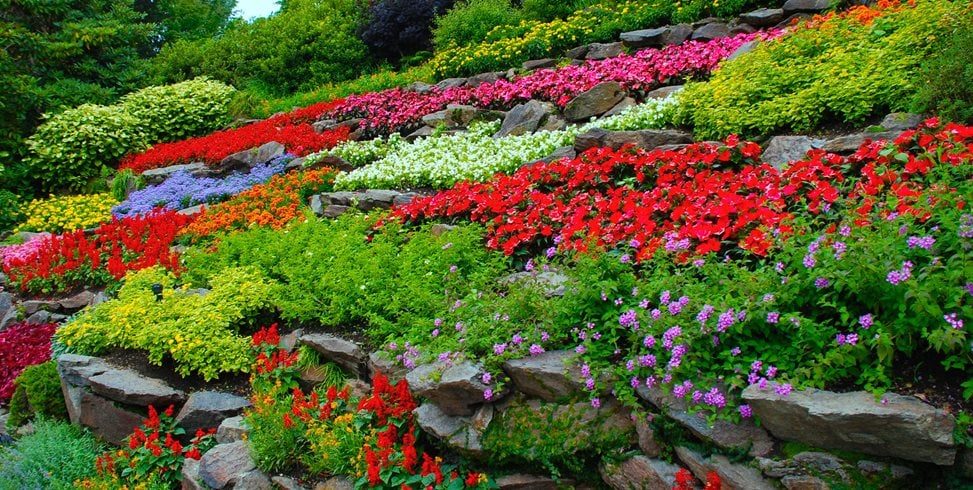
Start Your Flower Garden Today!
A lot pf people wonder whether or not they should start a
flower garden and I am here to tell you that you should definitely start a
flower garden. There are many benefits that come with starting a flower garden
and that is why you should start your flower garden toady.
 First, I would recommend that you should start your flower
garden from seeds. Starting your garden from seeds might seem intimidating but
it isn’t as bad as you think. There are instructions on the back of the packages
that tell you things like how often to water the plant, how much sunlight it
needs, and how deep to plant the seed. The benefit from planting seeds is that
you get to see the progress of the plant and feel more accomplished of what you’ve
done. Another benefit to starting a flower garden is that it gets you outside.
Having an obligation to take care of your makes you be more active by going
outside to take of your plants. Getting outside and getting some fresh air is
healthy for the mind and body. Also, the benefit of having a flower garden is
that it helps decorate you house. Flowers are the best thing when it comes to improving
your house without spending a lot of money. They add color to your house in a
very inexpensive way. Overall, there is no really downfall to starting a flower
garden. So go to your local store that sells plant material and get started on
your flower garden today!
Saturday, October 19, 2019
Tomato Seeds or Grown Tomato Plant
One of the most popular plants to buy when starting a vegetable
garden are tomatoes. Tomato plants are one of the easiest plants to take care
of when it comes to starting a garden, but the question is whether you should
buy a tomato plant that is already grow or buy the seeds and start the plant
from scratch. Here are some pros and cons to buying a tomato plant already
grown or buying the seeds for a tomato plant.
 A pro for an already grown tomato plant is that you don’t have
to wait long to get tomatoes from the plant. Having to start from scratch means
that you will have to wait six to eight weeks for the plant to be able to start
producing tomatoes. After the seeds have grown for six weeks, then you’ll have
to wait for the tomatoes to grow. If you are impatient, I would recommend to buy
a grow tomato plant so you don’t have to wait as long to get tomatoes from it. A
pro for buying seeds is that you get to see the progress of the plant slowly
growing to maturity. It makes you feel more satisfied since you started the
plant from a seed and now you are getting tomatoes from it. Another pro for seeds
is that they are cheaper than a grown plant. A grown tomato plant is around 20
dollars while seeds are around 2 dollars. A pro for a grown plant is that they
are easier to take care of rather seeds. Seeds have to be watered a lot and
need to be looked after much more than a grown tomato plant. Those are a couple
of pros and cons to buying a grown tomato plant or buying tomato seeds.
Subscribe to:
Posts (Atom)